Date: 2026.04.25 Click: 178
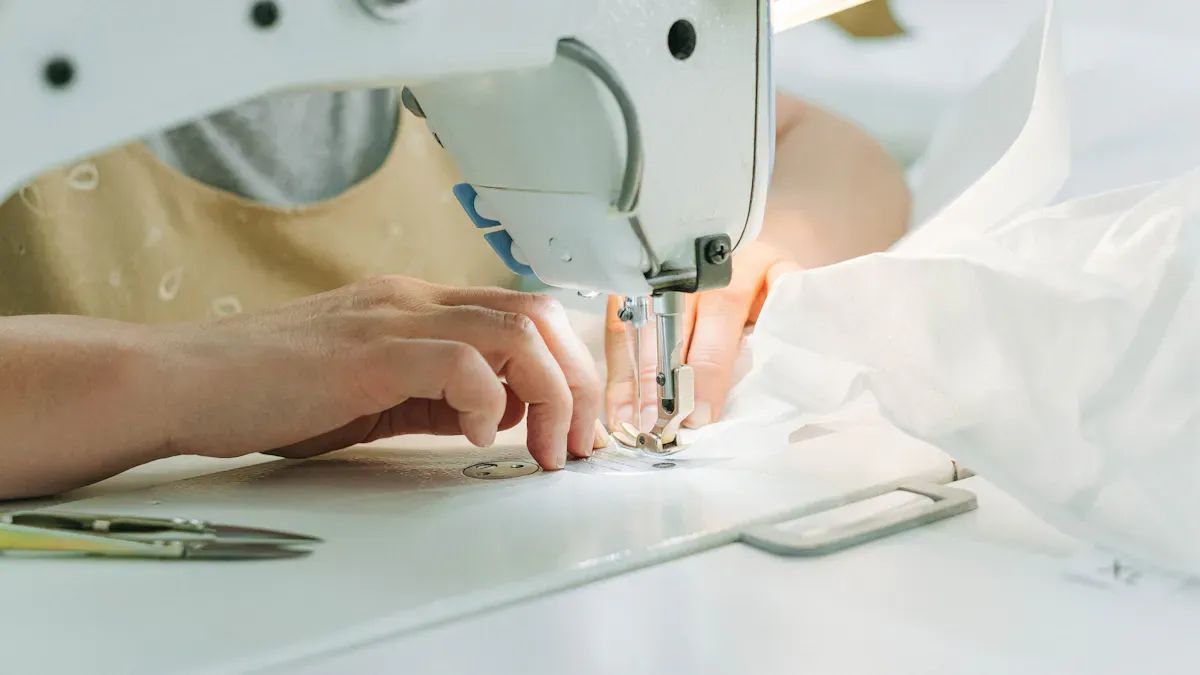
You need a bag making machine that fits your business needs, and finding a reliable bag making machine manufacturer is essential. Automatic machines are best for making lots of bags fast, helping you transition to using more machines instead of people. Manual machines are good for small businesses, offering more choices and lower initial costs. Semi-automatic machines fall in the middle. Consider how many bags you want to make, your budget, and your future plans before making a selection.
|
Machine Type |
Characteristics |
Ideal For |
|---|---|---|
|
Fully Automatic |
Works very fast, needs little help from people |
Making lots of bags |
|
Semi-Automatic |
Needs some help, can do many jobs, saves money |
Small businesses |
If you want the best choice, talk to a bag making machine manufacturer for expert advice.
Key TakeawaysPick the bag making machine that fits your needs. Automatic machines work well for making lots of bags. Manual machines are good for small businesses.
Look at your budget before you decide. Automatic machines cost more at first. They can help you save money later because they work faster.
Check how fast each machine works and how many workers you need. Automatic machines need fewer people. They make bags quicker than manual machines.
Think about how easy it is to change things. Manual machines let you switch designs fast. Semi-automatic machines give you both speed and control.
All machines need regular care. Taking care of them helps them last longer. It also keeps them working well and saves money on fixing them.
Automatic and manual bag making machines work at different speeds. Automatic machines can make 30 to 40 spools each minute. They can make up to 27,000 spools in one day. Manual packing without machines is much slower. It only makes 5 to 10 spools every minute. If you use a vacuum machine, you can make 20 spools per minute. Automatic machines help you work faster. They are good for companies that need to make lots of bags. Here is a simple chart to compare:
|
Machine Type |
Speed (spools per minute) |
Daily Output (spools) |
|---|---|---|
|
Manual Packing (No Equipment) |
5–10 |
N/A |
|
Manual Packing + Vacuum Machine |
20 |
N/A |
|
Automatic Filament Bagging Machine |
30–40 |
27,000 |
Automatic machines need fewer workers. They also make packs that look the same every time. You do not have to do the same job over and over. This means there are fewer mistakes. Packs are easier to handle later. You get more done with less effort. Manual machines need more help from people. This can cause more mistakes and less steady packs.
Packs look the same, so you waste less material.
Needing fewer workers helps you save time.
Packs that match help with other machines.
You should think about how much money you want to spend. Manual machines cost between $8,000 and $20,000. Semi-automatic machines cost $25,000 to $60,000. Fully automatic machines cost $70,000 to $150,000. Some fast machines can cost up to $400,000. Automatic machines cost more at first. But they save money and give better value later. Think about your budget and how many bags you want to make.
Manual machines are good for special orders and small jobs. Automatic machines are best for making lots of bags fast. They are not as good for custom jobs. Semi-automatic machines are in the middle. They let you make more bags when you need to. You can change what you make if your business needs change.
Automatic machines are great for big orders.
Manual machines are better for small or special jobs.
Semi-automatic machines give you some choices.
Automatic machines need regular care to work well. You will have to pay for repairs and sometimes stop work. Manual machines are easier to fix but may need more care. Semi-automatic machines are not too hard to keep up. They work well and are easy to fix. Remember to think about maintenance when you choose a machine. This helps your business run smoothly and saves money.
Automatic Bag Making Machines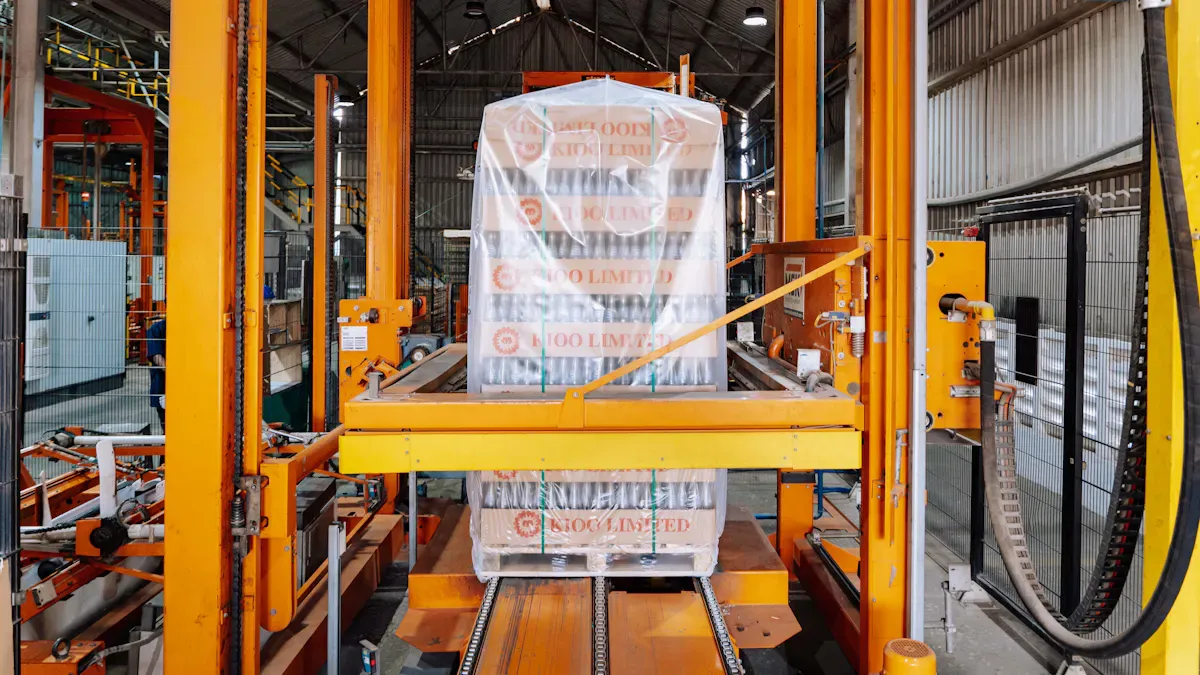
You get many benefits with fully automatic bag making machines. These machines use smart automation, like servo motor controls and photoelectric sensors. This helps them work faster and more accurately. You can make lots of bags without stopping often. Automated bagging keeps your production line moving smoothly. You spend less money on workers because the machines need little help. Fully automatic hffs machines have easy touchscreen controls. This makes them simple to use. You can make different kinds of bags to fit many needs. These machines let you use eco-friendly materials. This helps you reach your sustainability goals. Every bag has the same quality. Here is a table showing the main benefits:
|
Advantage |
Description |
|---|---|
|
Efficiency |
Makes many bags, little downtime, smart controls, safety features |
|
Cost-effectiveness |
Touchscreen controls, less maintenance and labor costs |
|
Adaptability |
Makes different bag types for many markets |
New technology helps bags stay the right size and cuts down mistakes.
Automated bagging saves money and makes more bags.
Fully automatic hffs machines let you use green options.
There are some downsides to fully automatic bag making machines. The first cost is high. They take up more space in your work area. Sometimes, these machines make waste from packaging materials. You need to take care of repairs and maintenance to keep them working well. Here is a quick list of common problems:
|
Disadvantages |
|---|
|
High starting costs |
|
Possible environmental issues |
|
Bigger space needed |
|
Waste from packaging |
Fully automatic bag making machines are best for businesses that need to make lots of bags and want steady quality. You should pick these machines if you run a food and drink company, a medicine business, or an online store. These jobs need fast, clean, and flexible packaging. Automated bagging helps you fill orders quickly. Fully automatic hffs machines help your business grow as more people buy your products. The market for these machines is getting bigger because many industries want them. Automation helps you stay ahead in tough markets.
Manual Bag Making Machines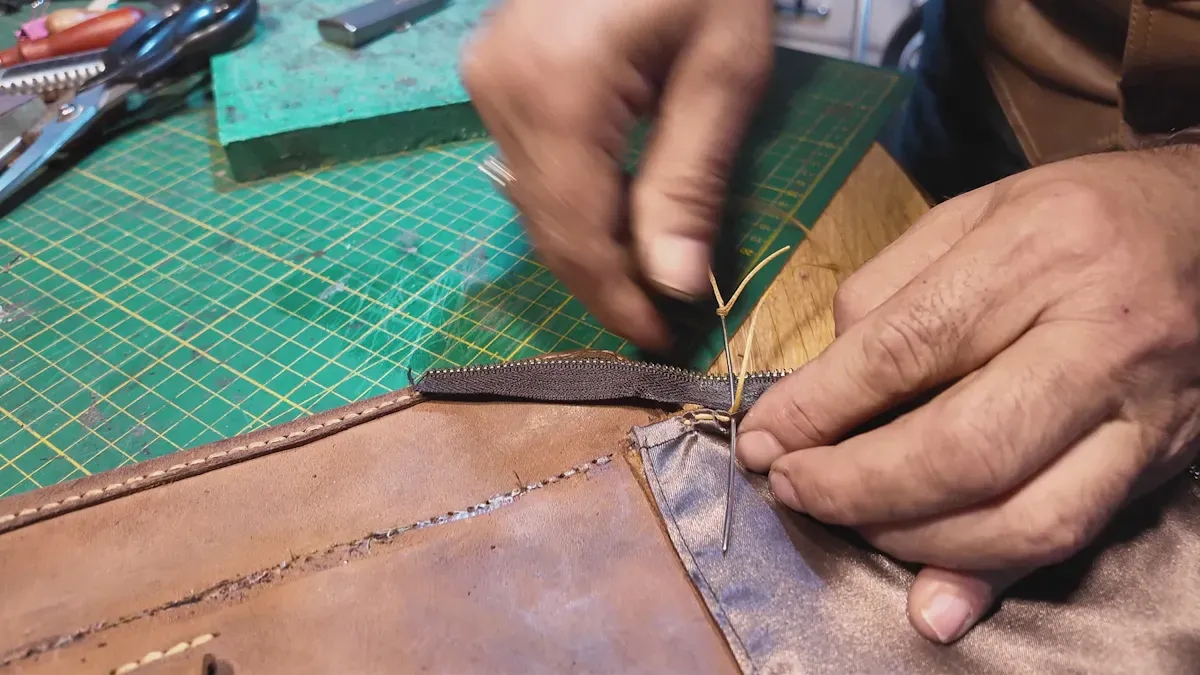
You can choose manual bag making machines if you want more control over your work. Manual packaging lets you adjust each step. You can change the size or shape of bags quickly. This helps when you get small or custom orders. Manual packaging does not need much training. You can teach new workers how to use manual machines fast. You spend less money at the start because manual machines cost less than automation. You do not need a big space for manual packaging. You can move manual machines easily if you change your workspace. Manual hffs machines let you try new ideas without waiting for new parts. You can fix manual machines with simple tools.
Tip: Manual packaging gives you the power to make changes fast. You can meet special customer needs without waiting for automation updates.
Manual packaging takes more time than automation. You need more workers to keep up with big orders. Manual machines can make mistakes if workers get tired. You may see bags that look different from each other. Manual packaging can slow down your business if you want to grow. You spend more on labor because manual work needs people for every step. Manual hffs machines do not match the speed of automation. You may need to stop work to fix manual machines. Manual packaging can lead to more waste if workers make errors.
Manual machines do not work well for high-volume jobs.
Manual packaging can make your costs go up if you need many workers.
Manual packaging fits small businesses best. You can use manual machines if you get many custom orders. Manual packaging helps when you want to test new products. You do not need to invest in automation right away. Manual hffs machines work well if you have a small team. You can use manual packaging in places where labor costs are low. Manual machines help you stay flexible. You can change your process fast if your business changes. Manual packaging is a good choice if you want to keep your first costs low. You can move to automation later when your business grows.
Semi-Automatic Bag Making MachinesNote: Manual packaging lets you start small and learn what works for your business before you invest in automation.
If your business is too big for manual machines but you cannot buy fully automatic ones, semi-automatic bag making machines are a good choice. These machines help you work faster than manual machines. You can use them in medium-sized businesses. You do some steps yourself, like putting products in trays. The machine does the rest, such as gas flushing and sealing. This gives you better results than manual machines. It also costs less than fully automatic ones. Semi-automatic hffs machines help you work better without losing control. You can change how you make bags if you need to. These machines let you use eco-friendly materials and make less waste. You can give customers green packaging and save money at the same time.
Tip: Semi-automatic machines help your business grow. You can start with semi-automatic hffs machines and get more automation later if you need it.
Semi-automatic bag making machines have many good points. They make bags faster than manual machines. You do not need as many workers, so you save money. Semi-automatic hffs machines help you make bags that look the same every time. You can use these machines for special orders or small groups of bags. They let you use recycled materials and cut down on waste.
Here is a table showing the main pros and cons:
|
Pros |
Cons |
|---|---|
|
Faster than manual machines |
Not as fast as fully automatic |
|
Lower labor costs |
Some manual steps still needed |
|
Flexible for custom orders |
May need more training |
|
Supports sustainability |
Maintenance required |
There are some problems with semi-automatic machines. You still need people for some steps. Semi-automatic hffs machines are not as quick as fully automatic ones. Your team must learn how to use the machines. You need to take care of the machines so they keep working well. Semi-automatic machines help you balance cost, speed, and being green. You can meet the need for eco-friendly packaging and keep your business ready for changes.
Comparison Table: Automatic vs Manual vs Semi-AutomaticYou want to pick the best machine for your business. The comparison table shows the main differences between fully automatic, manual, and semi-automatic bag making machines. You can look at the table and see which machine matches your needs.
|
Machine Type |
Speed (Bags/Hour) |
Labor Needed |
Upfront Cost |
Flexibility |
Maintenance |
|---|---|---|---|---|---|
|
Fully Automatic |
1200–1500 |
Very Low |
High ($70k–$400k) |
Low (best for large orders) |
Regular, skilled |
|
Semi-Automatic |
900–1100 |
Medium |
Medium ($25k–$60k) |
Medium (custom orders possible) |
Moderate, easy |
|
Manual |
300–500 |
High |
Low ($8k–$20k) |
High (small batches, custom jobs) |
Simple, frequent |
Tip: If you need to make thousands of bags each hour, fully automatic machines are the fastest and need the least workers. Semi-automatic machines are good if you want both speed and choices. Manual machines work well for small businesses or special jobs.
Fully automatic machines make bags faster than manual or semi-automatic machines. You spend less time and need fewer workers. Semi-automatic machines help you save money and still get good results. Manual machines cost less at first, but you need more people and spend more time on each bag.
Look at the chart below. It shows how many bags each machine can make and how much power they use in different places.
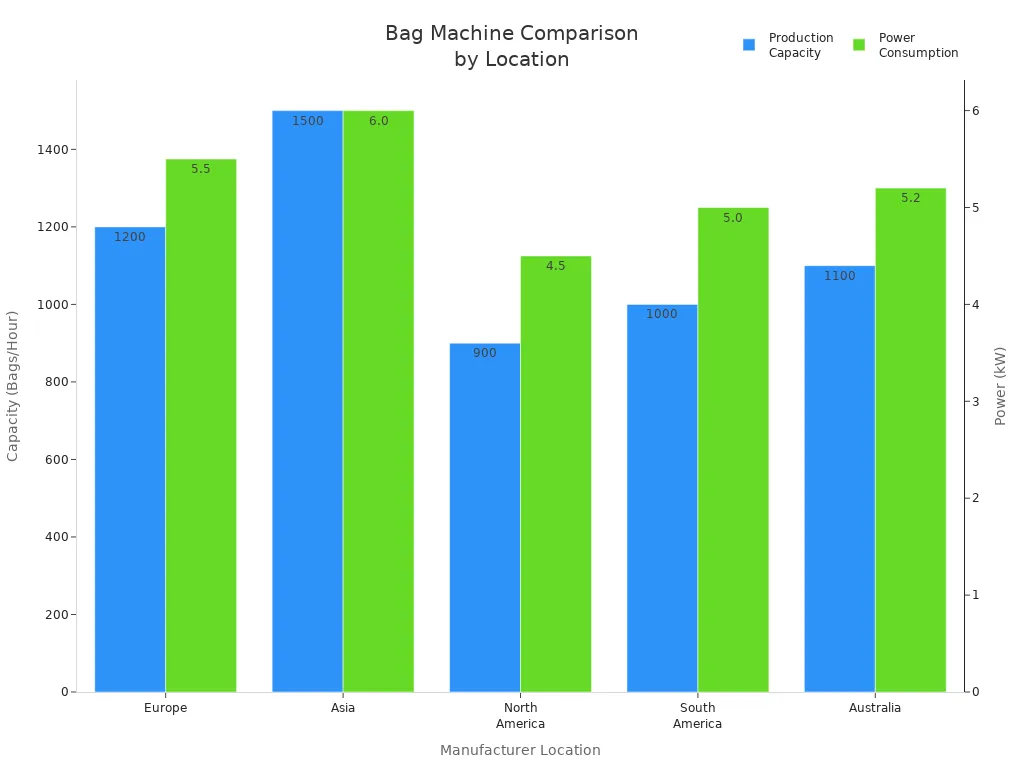
You see that fully automatic machines from Asia make the most bags. Machines from Europe and Australia use less power. If you want a machine that saves energy and works fast, fully automatic models from these places may be right for you.
Note: Picking a fully automatic machine helps your business grow and keeps quality high. Semi-automatic machines let you change your process. Manual machines give you control for special orders.
Use the table and chart to compare your choices. You can make a smart choice for your business.
How to Choose the Right MachineYou need to know how many bags your business must make each day. This helps you pick the right machine. Look at how fast each machine works and how much waste it makes. Think about how much energy the machine uses. Machines that use less energy save you money. Automation can help you use fewer workers. You should also check if the machine can grow with your business. Do not forget to count all costs, not just the price to buy the machine.
Here is a table to help you see what matters when you check your production volume:
|
Factor |
Description |
|---|---|
|
Production Speed |
The rate at which the machine can produce bags, impacting overall output. |
|
Material Waste Ratios |
The efficiency of material usage, with lower waste rates leading to higher profitability. |
|
Energy Efficiency |
The machine's energy consumption, affecting operational costs over time. |
|
Labor Cost Reduction |
Automation can significantly reduce the number of operators needed, lowering labor expenses. |
|
Scalability |
The ability of the machine to adapt to future production needs without requiring replacement. |
|
Total Cost of Ownership |
A comprehensive view of all costs associated with the machine, beyond just the purchase price. |
Tip: Write down your daily and monthly bag needs. This will help you match your numbers to the right machine.
Your budget shapes your decision. If you have more money to spend, you can buy a fully automatic machine. This type of machine works fast and cuts labor costs. It fits best when you need to make many bags. If your budget is smaller, you might choose a semi-automatic machine. This machine lets you do some steps by hand. You can change your process quickly if your orders change. Manual machines cost the least. They work well for small jobs or special orders. When you plan your budget, think about how much you will spend now and how much you will save later.
You should check how many workers you have. Automatic machines need very few people. You can run them with a small team. This helps if you have trouble finding workers or want to save on labor costs. Manual machines need more people. You must have enough workers to keep up with orders. Semi-automatic machines need some help from people, but not as much as manual ones. If you want to use fewer workers, choose a machine with more automation.
Note: If you have a small team or want to lower labor costs, automatic or semi-automatic machines are a smart choice.
You want your business to grow. You should pick a machine that helps you get bigger in the future. Start by looking at which bag types you sell the most. Make sure your machine can make these bags. Check how often you change bag size, design, or material. Choose a machine that can handle these changes. Find out where you lose time or materials. Pick a machine that helps you waste less. Think about how much you depend on worker skill. Machines that do the same job every time can help you grow faster.
Check which bag types bring in the most money.
See how often you change bag size, print, or paper.
Find where you waste materials or time.
Decide if you need machines that work the same way every time.
Tip: Choose a machine that can grow with your business. This saves you money and time later.
You should know where your business fits in the market. If you want to sell lots of bags to big companies, you need a machine that works fast and makes bags that look the same. Automatic machines help you do this. If you focus on custom orders or small batches, manual or semi-automatic machines give you more control. Think about your customers. Do they want eco-friendly bags? Pick a machine that can use green materials. Your machine choice should match your business goals and the needs of your customers.
Choosing a Bag Making Machine ManufacturerCallout: Match your machine to your market. This helps you stand out and keeps your customers happy.
When you pick a bag making machine manufacturer, you want good value and help for your business. Not every manufacturer gives the same service or quality. You should find a partner who wants to help you do well, not just sell you a machine.
Here are some key things to look at before you choose:
|
Criteria |
Description |
|---|---|
|
Specifications, Standards & Compliance |
Make sure the machines have ISO 9001 and CE certifications. Look for safety parts and parts you can adjust. |
|
Performance & Quality Validation |
Ask to see the machine work. Check if it is at least 95% accurate and has less than 1% mistakes. |
|
Cost-Efficiency Analysis |
Find out the full cost, including energy and repairs. |
|
Integration Capabilities |
See if the machine fits with your current line and software. |
|
After-Sales Support Evaluation |
Pick a manufacturer that gives 24/7 help and quick repairs if something breaks. |
|
Warranty Options |
Look for at least a 1-year warranty, and see if you can get more time. |
|
Customization Capabilities |
Check if the manufacturer can change the machine for your special needs. |
Tip: A good bag making machine manufacturer will answer your questions and show proof the machine works well.
Before you decide, ask these questions:
How many machines can you make and how fast?
Do your machines have ISO or CE certifications?
How do you check your machines for quality?
What help do you give after I buy?
Who do I call if I have a problem?
A trustworthy bag making machine manufacturer will give clear answers and strong support after you buy. You should feel sure your manufacturer will help your business grow and fix problems fast.
You can pick a bag making machine that fits your business. The table below helps you see which machine works best for you:
|
Machine Type |
Suitability Scenario |
Key Advantages |
|---|---|---|
|
Automatic |
High production, complex designs |
High efficiency, low labor, less waste, strong quality control |
|
Semi-Automatic |
Moderate volume, varying designs |
Good balance of speed and flexibility, fits short runs |
|
Manual |
Low volume, simple designs |
Low upfront cost, easy to adjust, but higher labor and waste risks |
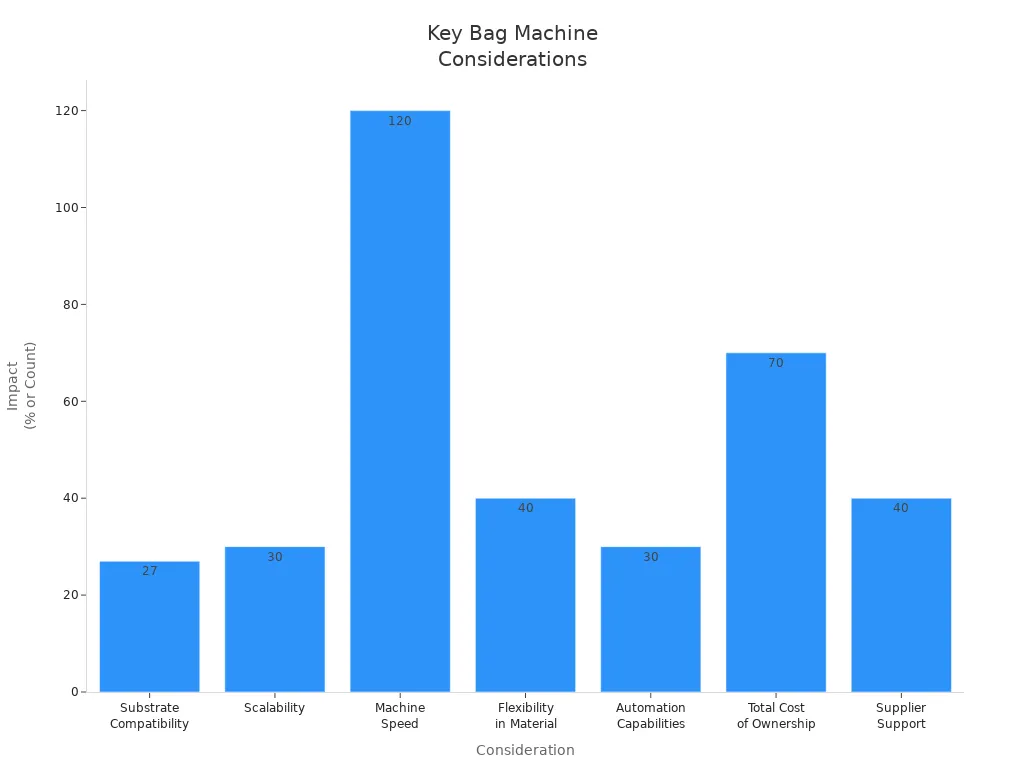
Think about these important things before you choose:
|
Consideration |
Details |
|---|---|
|
Substrate Compatibility |
27% changed machines for better material fit |
|
Scalability |
Flexible machines boost efficiency by up to 30% |
|
Machine Speed |
Modern machines reach 120 bags per minute |
|
Flexibility in Material |
40% aim for sustainable materials by 2025 |
|
Automation Capabilities |
Save up to 30% on packaging costs |
|
Total Cost of Ownership |
Ongoing costs can be 70% of total expenses |
|
Supplier Support |
40% of delays come from poor maintenance support |
You should talk to a trusted bag making machine manufacturer. They can help you pick the right machine for your products, like lockstitch, cutting, or sealing machines.
To make a smart choice, follow these steps:
Match the machine to your market and needs.
Check how long it takes to get your money back.
Train your team and use original parts.
Look at hybrid machines for speed and flexibility.
FAQMake a careful choice so your business can grow and do well.
Automatic machines are fast and need little help. Manual machines are slower and need more workers. Automatic machines make more bags. Manual machines let you control custom jobs.
Automatic machines need a bigger workspace. They are large and need room to work and for care. Always check the size before you buy.
You can use eco-friendly materials with all machines. Some machines work better with certain materials. Ask your manufacturer if the materials fit.
Check and clean your machine every week. Automatic machines need skilled care often. Manual machines need simple care more often. Good care keeps your machine working well.
You can upgrade as your business gets bigger. Start with manual machines, then move to semi-automatic or automatic ones. Ask your manufacturer about upgrades and training.
"4mmx2mm Disc Magnet" from S****** received 4 quotation(s)